





Fractional leadership is growing fast, but traditional recruiters have been slow to adapt. Explore why the UK fractional market has a discovery problem.


Introduction
Fractional leadership has moved well beyond being an emerging trend. Across the UK, more founder-led businesses, private equity-backed companies and growing SMEs are choosing fractional executives to access experienced C-suite leadership without the cost, commitment or organisational complexity of a permanent appointment.
Yet many business leaders encounter the same frustration when they begin looking for a Fractional CMO, CFO, COO or CRO: very few traditional recruitment firms actively specialise in fractional executive appointments.
At first glance, this seems surprising. The UK recruitment industry is mature, sophisticated and economically significant. The Recruitment and Employment Confederation reported that the sector contributed £40.6 billion to the UK economy in 2025. It has evolved to support permanent hiring, interim management, executive search and contract recruitment across almost every sector.
So why has fractional leadership remained largely outside the mainstream recruitment model?
The answer is not that recruiters have missed the opportunity. It is that the economics, operating models and talent dynamics of fractional leadership are fundamentally different from those of traditional recruitment.
Having spent the past several years building one of the UK’s largest specialist fractional marketing practices, researching the UK fractional market, and more recently co-founding Find a Fractional, I have seen this first-hand. The challenge is no longer demand. It is discovery.
Fractional Leadership Is Growing Faster Than the Recruitment Industry Is Adapting
Fractional leadership has become a recognised part of modern executive resourcing. Once associated primarily with finance, the model has expanded into marketing, operations, technology, people, revenue and commercial leadership.
The pace of growth is striking. Several market commentators have cited a sharp rise in LinkedIn profiles referencing fractional leadership, reportedly growing from around 2,000 in 2022 to more than 110,000 by 2024. While figures of this kind should be treated as directional rather than definitive, they clearly indicate a significant shift in how senior professionals are positioning themselves and how businesses are thinking about executive capability.
Demand is growing because business leaders increasingly recognise that they do not always need a full-time executive to solve a strategic challenge. A founder preparing for investment, a company entering a new market or a business rebuilding its go-to-market strategy may need experienced leadership for one or two days a week rather than five.
But demand and market maturity are not the same thing.
Mature markets have established routes to discovery, recognised buying processes, trusted intermediaries and widely understood standards. Fractional leadership is still developing those foundations. Awareness is increasing, but the mechanisms for finding, assessing and appointing the right fractional leader remain fragmented.
This is where traditional recruitment firms find themselves operating in unfamiliar territory. The market is growing, but it is not behaving like the permanent recruitment market they were built to serve.
Traditional Recruitment Was Built for a Different Commercial Model
Traditional recruitment has evolved over decades to solve a specific problem: helping organisations fill defined vacancies.
A role becomes available. A job specification is written. Candidates are identified. Interviews take place. One individual is appointed.
That process works well for permanent hiring. It also works for many interim and contract assignments. The recruitment industry has become highly effective at matching candidates to roles and vacancies to talent pools.
Fractional leadership works differently.
A fractional appointment rarely begins with a neat vacancy. It usually begins with a business problem.
A founder may need stronger commercial discipline before fundraising. A private equity-backed business may need sharper marketing leadership to support value creation. A scaling company may recognise that its marketing has outgrown its internal capability. In each case, the conversation starts with the strategic challenge, not the organisational chart.
That distinction changes the economics.
Traditional executive search fees are often based on a percentage of first-year remuneration. The larger and more senior the permanent appointment, the stronger the commercial return for the recruiter. Fractional roles, by contrast, may involve a senior executive working one or two days per week. The value to the client may be substantial, but the fee opportunity for a traditional recruiter is often materially smaller than a full-time executive placement.
The issue is not capability. Many recruiters understand leadership extremely well. The issue is model fit.
Fractional leadership is not simply permanent recruitment on reduced hours. It is a different way of accessing executive judgement, strategic accountability and commercial experience. It requires a different sourcing model, a different assessment process and a different understanding of how senior portfolio executives operate.

“The challenge isn’t a lack of exceptional fractional talent. It’s that the market still lacks efficient mechanisms for connecting businesses with the right leaders at the right time. Fractional is scaling faster than its supporting infrastructure.”
Rob Nicholls - Co-founder, FindaFractional®
The Best Fractional Executives Rarely Behave Like Traditional Candidates
One of the biggest misconceptions about the fractional market is that experienced fractional executives are simply senior professionals looking for part-time work.
The reality is more nuanced.
Most established fractional leaders are not active job seekers. They have deliberately built portfolio careers, often working with multiple organisations at the same time and maintaining long-term relationships across clients, investors, advisers and boards.
They are not necessarily uploading CVs to job boards, responding to advertised roles or making themselves visible through applicant tracking systems. Instead, they build reputations, cultivate trusted relationships and become known for solving particular types of commercial problem.
Their next engagement is more likely to come through a board recommendation, founder referral or professional network than through a conventional recruitment process.
.jpg)
VCMO Research Insight: UK Fractional Leadership Discovery
VCMO’s 2026 UK research into 180 fractional leaders found:
These findings reveal a market that is still heavily relationship-led.
That is not necessarily a weakness. At executive level, trust matters. Businesses appointing a Fractional CMO, CFO or COO are not simply buying capacity. They are buying judgement, pattern recognition and accountability. Those qualities are hard to evaluate through CVs alone.
But the relationship-led nature of the market creates a paradox.
The most experienced fractional executives are often the hardest to find because they are already busy delivering value to existing clients. At the same time, organisations looking for fractional leadership may struggle to identify the right person because there is no mature, universally recognised marketplace connecting both sides efficiently.
This is why the fractional market does not have a demand problem.
It has a discovery problem.
The Discovery Problem: Why Specialist Fractional Networks Are Emerging
Every mature market develops infrastructure that makes buying and selling easier.
Permanent recruitment has agencies and executive search firms. Property has estate agents. Venture capital has investor networks and platforms. Public equities have exchanges. As markets grow, mechanisms emerge to support visibility, trust and transactions.
Fractional leadership is still early in that journey.
Most businesses still find fractional leaders through personal recommendations, LinkedIn searches, existing advisers or specialist providers. Those routes can work very well, but they are difficult to scale and highly dependent on who happens to know whom.
This creates inefficiency on both sides.
Businesses may spend weeks looking for the right leader without knowing where to start. Experienced fractional executives may never become visible to organisations facing exactly the problems they are best equipped to solve.
That explains the rise of specialist fractional firms, curated executive communities and dedicated discovery platforms. These organisations are not replacing traditional recruitment. They are solving a different problem.
Rather than matching candidates to vacancies, they match proven executive experience to specific business challenges.
The emphasis shifts from job titles to outcomes. From availability to relevance. From “who is looking?” to “who has solved this before?”
That matters because fractional appointments are highly context-sensitive. The right Fractional CMO for a founder-led SaaS scale-up may be very different from the right Fractional CMO for a private equity-backed manufacturing business. Both may need marketing leadership, but the strategic context, stakeholder environment and commercial priorities are entirely different.
“The biggest challenge isn’t convincing businesses that fractional leadership works. It’s making exceptional fractional leaders easier to discover. As the market matures, we’ll see more infrastructure emerge to connect organisations with proven executives in a far more efficient way.”
Rob Nicholls - Co-founder, FindaFractional®
Will Traditional Recruiters Eventually Catch Up?
Yes. Almost certainly.
There is no reason to believe fractional leadership will remain outside mainstream recruitment indefinitely. Recruitment has always evolved in response to changes in the labour market. Executive search, interim management and contract recruitment all developed because organisations needed new ways to access talent.
Fractional leadership represents another stage in that evolution.
Some executive search firms are already building fractional practices. Others are beginning to partner with specialist providers or develop relationships with experienced portfolio executives. As client demand grows, more traditional recruiters will undoubtedly enter the market.
But the firms that succeed will not simply repackage permanent recruitment for fractional appointments.
They will need to understand that fractional hiring starts with a business problem, not a vacancy. They will need to build trusted communities of senior portfolio executives who may not behave like active candidates. They will need to assess chemistry, context and commercial relevance, not simply CV fit.
The shift is subtle but important.
The question is not: “Who matches this role?”
It is: “Who has successfully navigated this challenge before?”
That requires a different operating model. It also requires a deeper understanding of fractional leadership as a board-level, outcome-led proposition rather than simply a flexible resourcing category.
The recruitment firms that recognise this will play an important role in the next phase of the market. Those that do not may find that specialist networks and dedicated platforms continue to move faster.
Conclusion: The Future of Fractional Leadership Depends on Better Discovery
Fractional leadership has already established itself as a credible alternative to traditional executive hiring. Businesses increasingly understand that they do not always need a full-time C-suite appointment to solve a strategic challenge. Experienced executives are increasingly choosing portfolio careers that allow them to create value across multiple organisations.
What has yet to catch up is the market infrastructure around it.
Traditional recruiters are not absent from fractional leadership because they lack capability. They are less visible because the market has evolved around a different commercial model: one built on relationships, reputation, specialist expertise and business outcomes rather than permanent vacancies and conventional hiring processes.
That is beginning to change.
Specialist providers, curated communities and dedicated discovery platforms are helping to bridge the gap between organisations seeking experienced leadership and executives looking to deploy their expertise where it can have the greatest impact.
The next phase of fractional leadership will not be defined by whether businesses accept the model. Increasingly, they already do.
It will be defined by how effectively the market helps exceptional leaders and ambitious organisations discover one another.
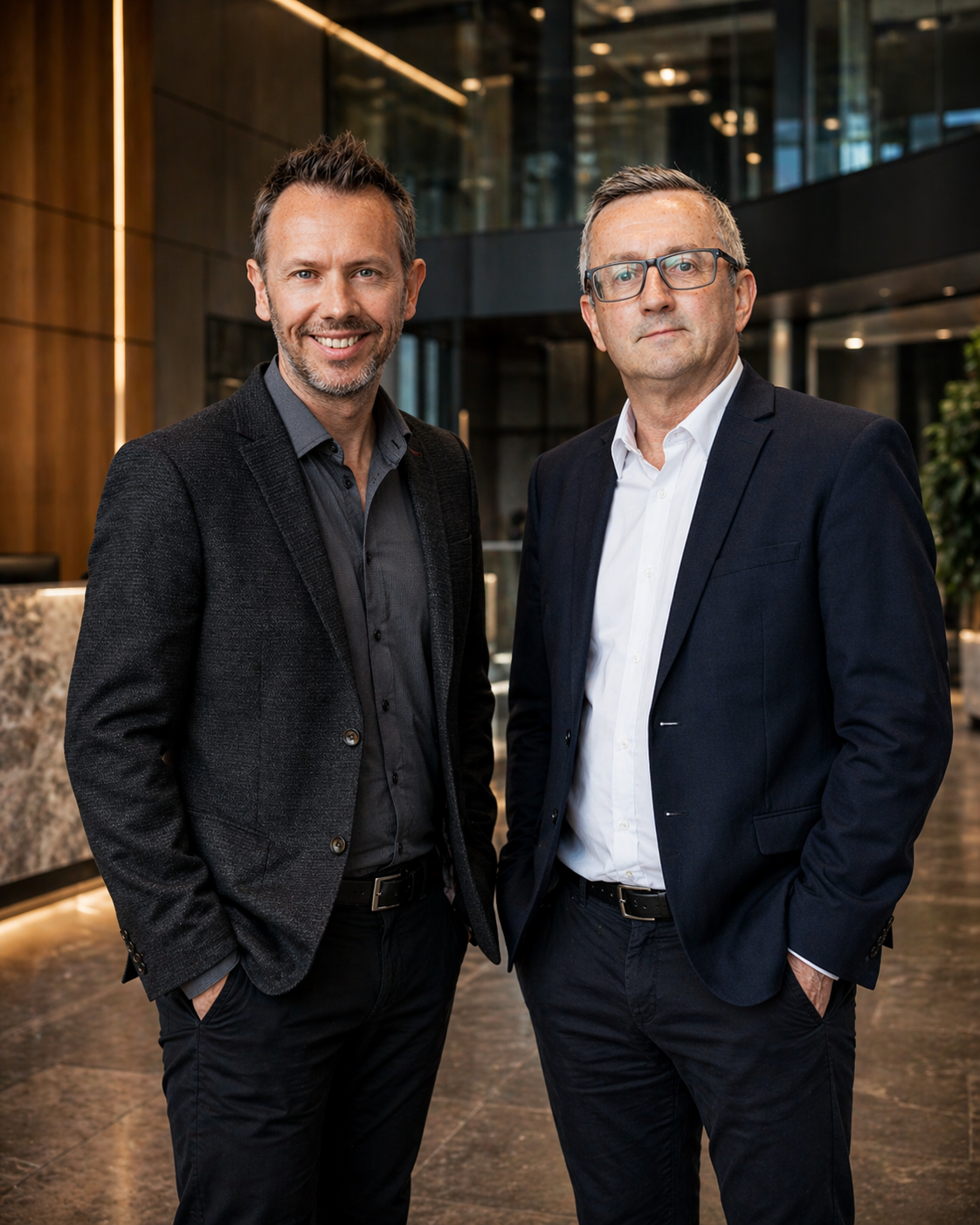
“The UK fractional market does not have a demand problem. It has a discovery problem.”
Paul Mills - Co-founder, FindaFractional®
A gentle next step...
If your business is considering whether a Fractional Executive could accelerate growth, transformation or commercial performance, FindaFractional® can help you assess the right model, mandate and leadership requirement. When the timing is right, search FindaFractional® for experienced executives that are the right leadership fit for your business. Create a free account.
What’s a Rich Text element?
The rich text element allows you to create and format headings, paragraphs, blockquotes, images, and video all in one place instead of having to add and format them individually. Just double-click and easily create content.
- By following these tips, you can make sure you’re noticed on LinkedIn and start building the professional connections you need to further your career.
-

Static and dynamic content editing
A rich text element can be used with static or dynamic content. For static content, just drop it into any page and begin editing. For dynamic content, add a rich text field to any collection and then connect a rich text element to that field in the settings panel. Voila!
How to customize formatting for each rich text
Headings, paragraphs, blockquotes, figures, images, and figure captions can all be styled after a class is added to the rich text element using the "When inside of" nested selector system.


How FindaFractional® can help...
Need help turning insight into leadership?
Choose the next step that fits your context - whether you're a business looking to hire a fractional leader, or you're an established executive looking for your next client.
.jpg)
.jpg)
Registered Address: 128 City Road, London EC1V 2NX United Kingdom.
Registered Company No: 14551337. ICO Registration No: ZB519372.
VAT Registration No: 438358272


