





Could UK employment reform accelerate demand for fractional leadership? Discover why more organisations are turning to fractional executives to access senior expertise with greater flexibility.


Introduction
In this article, Paul Mills, Co-Founder FindaFractional®, explores whether proposed changes to UK employment rights could accelerate the growing shift towards fractional leadership. Rather than viewing the reforms purely through the lens of compliance or hiring cost, he examines a broader question: how should organisations access senior expertise in a market where agility, speed and specialist capability are becoming increasingly important? As fractional executives move from niche solution to mainstream leadership model, the article considers what this means for CEOs, founders and investors rethinking the structure of their senior teams.
As the UK government introduces stronger day-one employment rights and enhanced worker protections, much of the debate has understandably focused on compliance, employee welfare and the implications for employers.
Yet beneath the headlines lies a broader strategic question.
Could these reforms accelerate an existing shift in how organisations access leadership, expertise and capability?
For most businesses, permanent employees will remain the foundation of long-term success. However, as employment obligations increase and economic uncertainty persists, boards and leadership teams are becoming more deliberate about when they hire permanently and when they access specialist expertise through more flexible models.
One of the clearest beneficiaries of this shift is fractional leadership.
While often associated with start-ups, fractional executives are increasingly being engaged by scale-ups, private equity-backed businesses and established organisations undergoing growth, transformation or change. The trend was already gathering momentum before employment reform entered the conversation. New regulations may simply accelerate a movement that is already reshaping executive hiring.
The Conversation Is Bigger Than Employment Rights
It would be simplistic to suggest that employment legislation is driving the rise of fractional leadership.
The reality is that multiple structural forces have been pushing organisations towards more flexible leadership models for several years.
Businesses are operating in an environment characterised by economic uncertainty, skills shortages, rapid technological change and increasing pressure to deliver growth while managing costs. At the same time, many senior executives are actively rethinking traditional career paths.
Research suggests that more than 65% of senior executives are now exploring alternatives to conventional full-time employment, including portfolio, advisory and fractional careers. Meanwhile, one UK leadership services firm reports that the number of professionals operating fractionally has grown from approximately 2,000 to more than 110,000 in just two years.
This shift is occurring on both sides of the market. Businesses are seeking greater flexibility, while experienced leaders are increasingly choosing portfolio careers that allow them to apply their expertise across multiple organisations.
Against this backdrop, employment reform may act less as a catalyst for change and more as an accelerant of a trend that is already well underway.
Why Boards Are Becoming More Deliberate About Executive Hiring
For boards, founders and investors, hiring decisions have always been about more than salary costs.
Executive appointments represent significant commitments of time, capital and organisational energy. The wrong hire can delay growth, disrupt momentum and create costly strategic drift. The right hire can unlock substantial value.
As organisations navigate increasingly complex markets, many are asking a fundamental question:
Do we need this capability full-time, or do we need access to expertise?
This distinction matters.
Many businesses experience periods where they require senior leadership capability without necessarily needing a permanent executive presence. Entering a new market, preparing for investment, repositioning a brand, implementing digital transformation or navigating a leadership gap may require strategic expertise for a defined period rather than indefinitely.
Traditional executive recruitment can often take three to six months. Fractional executives, by contrast, can frequently be engaged and operational within two to three weeks.
In fast-moving environments, that speed can be commercially significant.

"Employment reform may influence hiring decisions at the margins, but the bigger story is how organisations are rethinking access to leadership capability. Increasingly, businesses don't need more management capacity; they need specialist expertise, strategic judgement and executive-level experience at key moments in their growth journey. That's one of the reasons fractional leadership is moving rapidly from a niche concept into the mainstream."
— Rob Nicholls, Co-Founder of FindaFractional®
Why Fractional Leadership Is Moving Into The Mainstream
Fractional leadership is no longer a niche concept.
Recent data suggests that 47% of UK businesses now utilise fractional working in some form, while the average UK start-up increased its use of fractional workers from 1.7 hires in 2022 to 4.4 hires by the end of 2024.
Business leaders increasingly view the model as a permanent component of organisational design rather than a temporary solution.
Research indicates that 68% of business leaders expect fractional executives to become a standard part of organisational structures within the next five years. Among organisations employing between 50 and 500 people, 73% see fractional leadership as a key strategy for accessing senior expertise while maintaining flexibility.
These figures suggest that fractional leadership is moving beyond its early-adopter phase and entering the mainstream.
What began as a practical solution for resource-constrained businesses is evolving into a strategic workforce model used by organisations of all sizes.
The Next Challenge: Finding The Right Fractional Leader
As fractional leadership moves into the mainstream, a new challenge is emerging for businesses.
Finding the right executive.
Unlike traditional recruitment markets, the fractional sector remains relatively fragmented. Many highly experienced fractional leaders operate independently, often relying on personal networks, referrals and word-of-mouth introductions. While this can work well in established circles, it can make it difficult for founders, CEOs and investors to identify, evaluate and compare suitable candidates.
The challenge is not simply finding someone with the right functional expertise. It is finding someone with the right combination of experience, sector knowledge, leadership style and commercial track record for a specific stage of business growth.
A scale-up preparing for investment may require a very different type of fractional CFO than a mature business undergoing digital transformation. A founder-led company seeking market expansion may need a different kind of Fractional CMO than a private equity-backed business focused on accelerating revenue growth.
As demand continues to increase, the market is beginning to mature. Businesses are looking for more efficient ways to discover proven fractional leaders, while executives are seeking greater visibility among organisations that need their expertise.
This growing demand for transparency, accessibility and better matching is helping to professionalise the fractional leadership market. Just as recruitment platforms transformed access to permanent talent, new specialist platforms are emerging to help organisations identify and engage the right fractional expertise more quickly and with greater confidence.
As fractional leadership becomes a permanent feature of modern organisational design, the ability to connect businesses with proven executive talent is likely to become increasingly important.
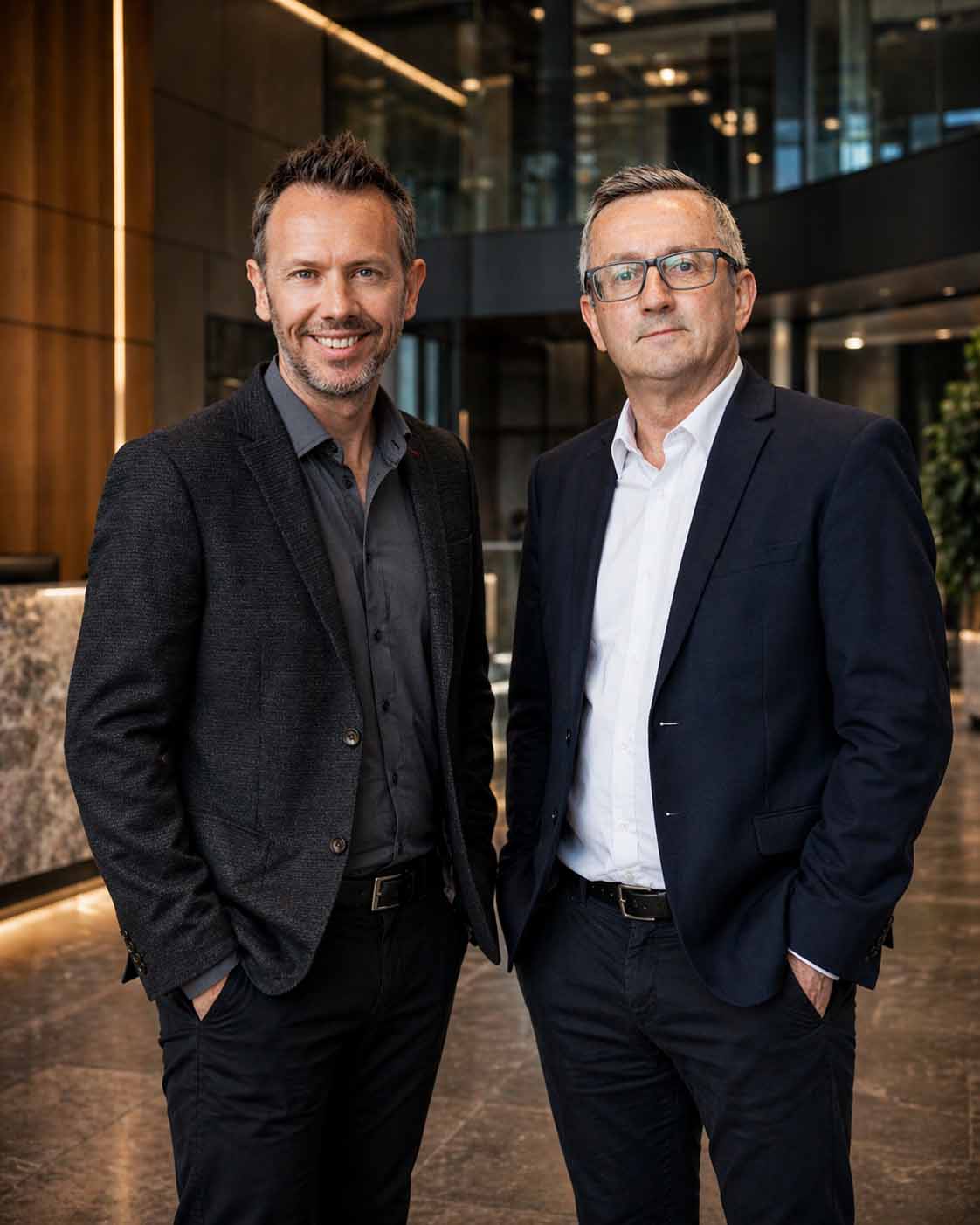
"As demand for fractional leaders continues to grow, the challenge is no longer whether the model works. The challenge is helping businesses identify the right executive for their specific circumstances. A founder preparing for investment, a private equity-backed business pursuing growth, and a company navigating transformation may all require very different leadership profiles. Better matching between organisations and experienced fractional leaders will become increasingly important as the market matures."
— Rob Nicholls, Co-Founder of FindaFractional®
Not Every Leadership Role Needs To Be Full-Time
This does not mean organisations should abandon permanent hiring.
Rather, it reflects a growing recognition that different business challenges require different talent models.
Certain leadership functions are particularly well suited to fractional engagement because organisations often need strategic direction more than constant executive presence.
Roles such as Chief Marketing Officer, Chief Financial Officer, Chief Technology Officer and Chief Operating Officer are among the fastest-growing areas of fractional adoption.
Demand for fractional CMO services grew by 35% between 2020 and 2023, while 43% of SMEs operating in high-growth sectors now engage fractional CFOs.
These roles are often engaged to support growth initiatives, market expansion, digital transformation, fundraising, acquisitions or operational change.
The objective is not to reduce leadership quality. In many cases, it is the opposite. Fractional models allow organisations to access senior-level expertise that might otherwise be unavailable or unaffordable through traditional recruitment channels.
Fractional Leadership Complements Permanent Capability
One of the most common misconceptions is that fractional executives are intended to replace permanent employees.
In reality, the most successful organisations increasingly combine permanent teams with specialist external expertise.
Permanent employees provide continuity, culture and operational consistency. Fractional leaders provide strategic insight, specialist knowledge and additional executive capacity during periods of growth or change.
The relationship is complementary rather than competitive.
This blended approach enables organisations to retain core capabilities while accessing expertise precisely when and where it is needed.
For founder-led businesses, scale-ups and investor-backed companies, this can provide a powerful balance between agility and stability.
What This Means For CEOs, Founders And Investors
The most important question facing business leaders is no longer whether fractional leadership is viable.
The market has already answered that.
The more relevant question is how organisations should determine which capabilities genuinely require permanent leadership and which can be accessed more effectively through flexible executive models.
As employment regulations evolve, organisations are likely to become increasingly intentional about workforce design. Some capabilities will remain core and permanent. Others may be better delivered through fractional, interim or specialist leadership arrangements.
The businesses that make these decisions well will be better positioned to manage risk, control costs, accelerate transformation and respond quickly to changing market conditions.
Conclusion - A Structural Shift Rather Than A Temporary Trend
Zero-day employment rights may not create the fractional economy.
However, they may accelerate a broader shift that was already reshaping how organisations think about talent, leadership and capability.
With almost half of UK businesses already using fractional working in some form and the majority of business leaders expecting fractional executives to become a standard feature of organisational structures within the next five years, the evidence increasingly points towards a structural rather than cyclical change.
For organisations navigating growth, transformation and uncertainty, the future may not be a choice between permanent and fractional talent.
Instead, it may lie in building the right combination of both.
A final thought…
Businesses looking to learn more about the fractional leadership market or explore experienced fractional executives across a range of disciplines can find additional resources and executive profiles through FindaFractional®, a specialist platform designed to help organisations connect with proven fractional leaders. When the timing is right, search FindaFractional® for experienced executives that are the right leadership fit for your business. Create a free account.
What’s a Rich Text element?
The rich text element allows you to create and format headings, paragraphs, blockquotes, images, and video all in one place instead of having to add and format them individually. Just double-click and easily create content.
- By following these tips, you can make sure you’re noticed on LinkedIn and start building the professional connections you need to further your career.
-

Static and dynamic content editing
A rich text element can be used with static or dynamic content. For static content, just drop it into any page and begin editing. For dynamic content, add a rich text field to any collection and then connect a rich text element to that field in the settings panel. Voila!
How to customize formatting for each rich text
Headings, paragraphs, blockquotes, figures, images, and figure captions can all be styled after a class is added to the rich text element using the "When inside of" nested selector system.


How FindaFractional® can help...
Need help turning insight into leadership?
Choose the next step that fits your context - whether you're a business looking to hire a fractional leader, or you're an established executive looking for your next client.
.jpg)
.jpg)
Registered Address: 128 City Road, London EC1V 2NX United Kingdom.
Registered Company No: 14551337. ICO Registration No: ZB519372.
VAT Registration No: 438358272


